Access Control System Installation in Singapore: Secure Your Premises Without Disrupting Daily Operations
access control system installation
Security should not become a daily headache for your business. Whether you manage a corporate office in the CBD, a commercial building in the heartlands, a warehouse, or a multi-floor workplace, you need a reliable way to control who enters your premises, which areas they can access, and when their access should end. A professionally planned access control system gives your team greater control over entry points while helping your business operate smoothly, without relying entirely on physical keys or manual security checks.
The challenge is choosing a solution that fits the way your premises actually work. A system that looks impressive in a product brochure may not be suitable for a busy reception area, a restricted server room, or a building with existing CCTV and alarm infrastructure. That is why access control system installation should begin with your operational requirements, not simply a list of hardware features. With the right planning and implementation, you can strengthen security, improve accountability, and prepare your premises for future business needs.
What Is an Access Control System and Why Does Your Business Need One?
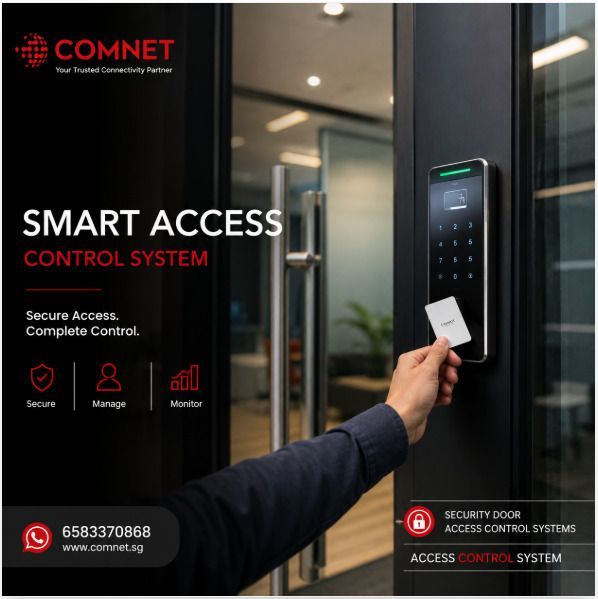
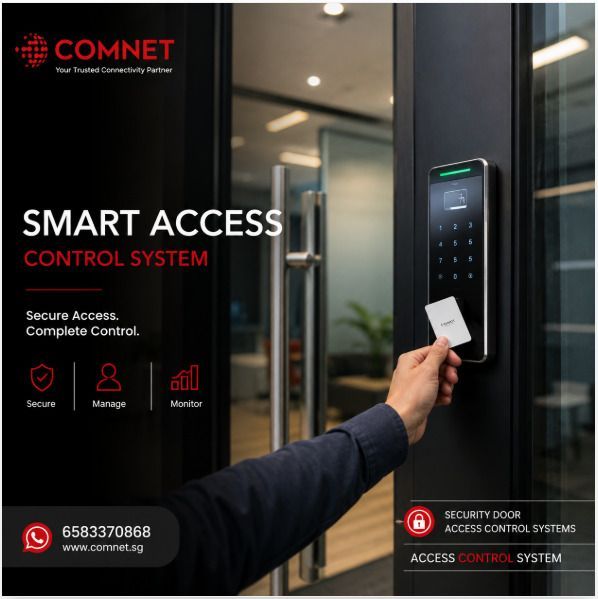
An access control system is a security solution that verifies credentials before granting authorised individuals access to designated doors, gates, rooms, or other controlled areas. Depending on the system selected, credentials may include access cards, PIN codes, mobile credentials, or biometric identification. Instead of issuing unrestricted keys, businesses can assign permissions based on job roles, working hours, and specific security requirements.
For Singapore businesses, this matters because access requirements often change as employees join or leave, contractors arrive for maintenance, and visitors move through shared facilities. A well-configured commercial access control system makes it easier to manage these changes systematically. It can also maintain access event records, helping authorised personnel investigate unusual activity and review how controlled entry points are being used.
Common Signs Your Existing Door Security Is No Longer Enough
Traditional locks may still serve a purpose, but they become harder to manage when multiple people require different levels of access. Lost keys, duplicated keys, shared PINs, and delayed lock changes can create unnecessary administrative work and leave security gaps that are difficult to track.
You may need an upgraded door access control system if your business struggles to revoke access promptly, monitor restricted areas, manage staff movement, or coordinate security across several doors. These practical issues are worth addressing before an incident occurs, particularly when your premises contain valuable equipment, confidential information, inventory, or critical IT infrastructure.
Choosing the Right Access Control System for Your Premises
There is no single solution that suits every building. The best option depends on the number of access points, the sensitivity of the areas being protected, daily visitor traffic, existing infrastructure, and how much administrative flexibility your team requires. A proper assessment helps you invest in useful capabilities rather than paying for features that your organisation may never use.
Card-Based and Key Fob Access Control
Card and key fob systems are suitable for many offices, commercial properties, and staff entrances because users can present their assigned credentials at a reader. When an employee leaves the organisation or a card goes missing, an administrator can typically deactivate the credential without replacing every physical lock.
However, cards and fobs must be managed carefully. Shared credentials reduce accountability, while lost cards should be reported and deactivated promptly. For many organisations, a card-based office access control system provides a practical balance between convenience, manageable administration, and controlled entry.
PIN, Biometric and Mobile Access Solutions
Keypad systems allow users to enter an assigned PIN, while biometric readers may verify characteristics such as fingerprints or facial features. Mobile access solutions can offer additional convenience by allowing supported smartphones to act as credentials, subject to the selected platform and its configuration.
Each option has different operational considerations. PINs can be shared, biometric systems require careful attention to privacy and data handling, and mobile credentials depend on device compatibility and system design. A suitable smart access control system should match your security objectives, user experience, and maintenance capabilities rather than follow technology trends for their own sake.
Integrated Access Control for Multi-Door Buildings
Larger premises may need a centralised approach to managing multiple doors, departments, floors, or facilities. A centrally managed building access control system can help administrators apply consistent access policies, review events, and manage permissions across supported locations.
If your premises already use CCTV, alarm systems, or visitor management software, consider whether the proposed solution can integrate with those systems. Compatibility must be confirmed during planning, as integration depends on the devices, software platforms, licensing, and available interfaces involved.
Access Control System Installation: What Should Happen Before Work Begins?
A successful access control system installation is not simply a matter of mounting readers and connecting cables. The installer must understand how people move through the building, how the doors operate, where equipment can be installed, and what happens if power or network connectivity is interrupted.
Getting these details right early helps reduce avoidable rework, installation delays, and operational disruption. It also provides a clearer basis for estimating the project scope and identifying requirements that may affect the final cost.
1. Conduct a Proper Site Assessment
The first step is to identify every entry point that requires control, including main entrances, staff doors, server rooms, storage areas, loading bays, and other restricted spaces. Each location should be assessed for door hardware compatibility, cabling routes, power availability, network connectivity, and the practical placement of access readers.
A detailed site survey also helps identify constraints that may not be obvious during an initial discussion. Existing locks may need modification, cable routes may require additional work, and certain doors may have specific safety or emergency-egress requirements. Addressing these conditions before installation makes the project more predictable.
2. Define Access Permissions and User Roles
Before configuring the system, establish who should be allowed into each area and during which hours. For example, reception staff may require access to common areas, while IT personnel may need authorised entry to a server room. Cleaning contractors may require temporary access during approved periods, whereas visitors should only enter areas appropriate to their visit.
Clear permission rules make your access control system installation more effective because the technology supports an agreed security policy rather than leaving administrators to make decisions on the spot. The business should also establish a process for onboarding employees, changing permissions, revoking credentials, and reviewing access rights regularly.
3. Check Hardware, Cabling and Network Requirements
An installation may include access readers, electronic locks, control panels, power supplies, exit devices, management software, and supporting cabling. The precise combination depends on the selected solution, door construction, site conditions, and integration requirements.
Network planning is equally important for systems that rely on connected controllers or centralised management. Power backup, equipment placement, cable labelling, and documentation should be considered where relevant. A professional access control system installer can help coordinate these elements so that the equipment works as a complete solution rather than a collection of separate devices.
4. Test Every Door Before Handover
Installation is not complete merely because the reader lights up or the lock responds to a card. Each controlled entrance should be tested using the intended credentials, access permissions, schedules, and exit procedures. Where applicable, the commissioning process should also verify event logging, alarms, network behaviour, and integration with other security systems.
Emergency release and safe exit arrangements must be assessed in accordance with the applicable building requirements and system design. The installer should document the configuration, explain routine administration, and identify the appropriate support process before the system is handed over to your team.
How Much Does Access Control System Installation Cost in Singapore?
The cost of access control system installation in Singapore depends on the project scope rather than a single standard price. A basic installation covering a small number of doors will generally involve different requirements from a multi-floor commercial deployment with centralised management and CCTV integration.
Several factors influence the quotation:
- Number of doors: More controlled entry points usually require additional readers, locks, controllers, and installation work.
- Hardware selection: Card readers, biometric devices, electronic locks, and other components have different costs.
- Existing infrastructure: Reusable cabling and compatible door hardware may reduce the amount of additional work required.
- System integration: Connecting access control with CCTV, alarms, or visitor management may involve extra configuration and licensing.
- Software and administration: User management, reporting, cloud features, and ongoing support can affect the total investment.
- Site conditions: Cable routing, access restrictions, and work scheduling can influence labour and project duration.
When comparing quotations, look beyond the initial equipment price. Ask what is included in the installation, testing, configuration, documentation, warranty, and maintenance arrangements. A transparent scope helps you compare providers fairly and understand the likely total cost of ownership.
Why Professional Access Control Installation Makes a Difference
A low-cost installation can become expensive when equipment is incompatible, access permissions are configured incorrectly, or faults emerge after the system goes live. Professional implementation helps reduce these risks by addressing site conditions, system design, installation quality, and commissioning as part of one coordinated process.
The right provider should also understand how the system will be managed after handover. Your business needs a practical way to deactivate lost credentials, update employee permissions, review access records, and obtain technical assistance when problems occur. These operational details are just as important as the reader installed at the door.
Integrating Access Control with CCTV and Alarm Systems
When supported by compatible equipment, integration can help security personnel correlate access events with camera footage and alarm activity. For instance, an access event outside normal working hours may be reviewed alongside the relevant CCTV recording, helping authorised staff investigate the situation more efficiently.
However, integration should be designed around real operational needs. Confirm which devices and software are compatible, which events can be shared, and who will receive alerts. A properly scoped integrated access control system can improve visibility without creating unnecessary complexity for the people responsible for daily security operations.
Maintenance, Updates and Access Reviews
Security requirements do not remain static. Employees change roles, contractors finish projects, devices age, and software platforms receive updates. Regular maintenance and periodic permission reviews help ensure that your access control security system continues to reflect how the premises are actually used.
Your maintenance plan should cover relevant hardware inspections, software and firmware updates, credential administration, event-log reviews, and troubleshooting procedures. The recommended frequency will depend on the equipment, site conditions, manufacturer guidance, and operational risk. Documented maintenance also helps your team identify recurring problems before they cause avoidable disruption.
Why Choose COMNET for Access Control System Installation?
Choosing an installation partner means choosing who will help translate your security requirements into a working system. COMNET provides access control solutions for businesses seeking support with system planning, installation, integration, and ongoing infrastructure needs. Its published services include on-site survey and design, access control integration, security system integration, Power over Ethernet, and maintenance support.
Rather than assuming every site needs the same equipment, businesses should begin with a clear assessment of their doors, user groups, existing infrastructure, and future expansion plans. This creates a stronger foundation for selecting a solution that balances security, usability, and long-term operational value.
For organisations in Singapore, COMNET's Access Control System Installation Guide offers a useful starting point for understanding the installation process, from planning and hardware selection to testing and ongoing management.
Frequently Asked Questions About Access Control Systems
What is the best access control system for an office in Singapore?
The best option depends on your number of doors, security requirements, staff movement, visitor traffic, and existing infrastructure. Card-based systems may suit straightforward office environments, while biometric, mobile, or centrally managed solutions may be more appropriate for specific operational requirements.
How long does access control system installation take?
The duration depends on the number of doors, site readiness, cabling requirements, hardware compatibility, and the complexity of integration. A small installation may be completed more quickly than a multi-floor project, but a reliable schedule should be confirmed after the site assessment.
Can an access control system work with existing CCTV?
Yes, where the selected access control platform and CCTV equipment support the required integration. Compatibility, event sharing, software licensing, and configuration should be confirmed before the project begins.
Is professional access control installation worth the investment?
Professional installation can help reduce configuration errors, improve system reliability, and ensure that access permissions and safety requirements are properly considered. The value depends on the quality of implementation, the complexity of your premises, and the support available after handover.
Secure Your Premises with COMNET's Access Control Solutions
Your building deserves more than a lock that simply keeps a door closed. It needs an access strategy that gives authorised people convenient entry, keeps restricted areas under control, and helps your team manage security without unnecessary administrative work. Whether you are planning a new installation or upgrading an existing setup, the right access control system installation starts with understanding your site, your people, and your business priorities.
Ready to take control of your building security? Speak with COMNET about a solution tailored to your premises, from site assessment and system design to professional installation and integration with compatible security infrastructure. Visit the COMNET Access Control System Installation Guideto explore the process, then contact the COMNET team through its official access control services pageto discuss your requirements and request a non-obligatory consultation. Make your next security upgrade a considered business investment—with COMNET helping you plan for reliable access, smoother operations, and room to grow.